How one fellowship transformed my understanding of digital care— and why I believe every community deserves these conversations.
By Ts’epang Maboee
In 2026, Informed (formerly Internews Europe), Digital Society of Africa (DSA) and Asociação Kutakesa (Angola) jointly implemented Safe Sisters fellowships in Lesotho, Namibia and Angola. The programme focused on proactive preparedness and prevention of digital risks through a complete cycle of Training of Trainers, peer support, mentorship and community-level training allowing fellows to turn new knowledge and skills into usable capacity for others.
Implemented under the AGILE project, the activity upskilled 34 women and female-identifying journalists, communicators, human rights defenders and activists across the three countries with practical digital safety skills adapted to their context and supported them to train others within their communities.
This series of transformation stories illustrate selected fellows’ journey to becoming digital security trainers for their community. Beyond gaining technical knowledge and skills, the stories demonstrate individual and professional growth, confidence and leadership, and the value of community and care in building resilience.
Before Before Safe Sisters, I Thought I Already Knew What It Meant to Protect People
For most of my adult life, advocacy has been at the heart of everything I do. Living and working in Lesotho, a small mountainous country in Southern Africa, I have dedicated my career to supporting communities through health advocacy, youth engagement and social justice initiatives. As a young woman living openly with HIV, my lived experience has shaped my passion for creating safe spaces where people feel seen, heard and empowered to live with dignity.
Because of this, I believed I understood what it meant to protect people.
To me, protection meant ensuring that people had accurate health information. It meant promoting dignity, reducing discrimination, encouraging resilience, and reminding people that they deserved to be treated with respect. But there was one form of protection I had not fully considered.
The digital world.
Like many people, I relied on technology every day. I communicated through WhatsApp, shared advocacy messages on social media, stored sensitive documents on my phone and laptop, managed professional conversations online, and used digital platforms to connect with thousands of people. Yet I rarely stopped to ask whether I was truly safe in those spaces.
I knew how to use technology. I did not yet understand how easily it could be used against me—or the people I served. When I joined the Safe Sisters Fellowship, I expected to gain practical digital security skills. Safe Sisters is a women-centred fellowship that empowers women to strengthen their digital safety and resilience while creating a supportive community where they can learn from one another’s experiences. I imagined that I would simply learn how to create stronger passwords, identify phishing attempts and better protect my online accounts. Instead, the fellowship transformed the way I think about care itself.
Learning That Digital Care Is Human Care
One of the first lessons I learned through Safe Sisters was that digital security is not simply about technology.
It is about people.
Throughout the fellowship, we explored topics including password management, phishing, secure communication, digital footprints, device security, safer browsing, and two-factor authentication. These were practical skills that every internet user should understand. However, the fellowship challenged us to think beyond the technical aspects. Every digital decision carries a human consequence.
A weak password can expose confidential conversations.
A successful phishing attack can destroy someone’s finances.
A leaked photograph can threaten a person’s dignity.
An insecure communication platform can place activists, journalists, healthcare workers, or survivors of violence at risk.
I began to understand that digital safety is inseparable from human rights. As someone working closely with vulnerable communities, this realisation deeply resonated with me. In HIV advocacy, confidentiality is not simply a professional obligation—it is an ethical responsibility. People trust us with deeply personal information because they believe we will protect them.
The fellowship helped me recognise that protecting people does not stop when conversations move online. If anything, our responsibility becomes even greater. For the first time, I realised that digital care is another form of community care.
That understanding changed everything.
Taking the Fellowship Home
When the fellowship ended, I found myself asking one question repeatedly.
What good is knowledge if it remains with me?
The more I reflected on everything I had learned, the more I realised that many people around me were facing digital risks without even recognising them.
Community activists.
Healthcare workers.
Students.
Content creators.
Entrepreneurs.
Friends.
Family.
Many of them relied on digital platforms every single day but had never received practical guidance on how to protect themselves online.
I knew I had to do something.
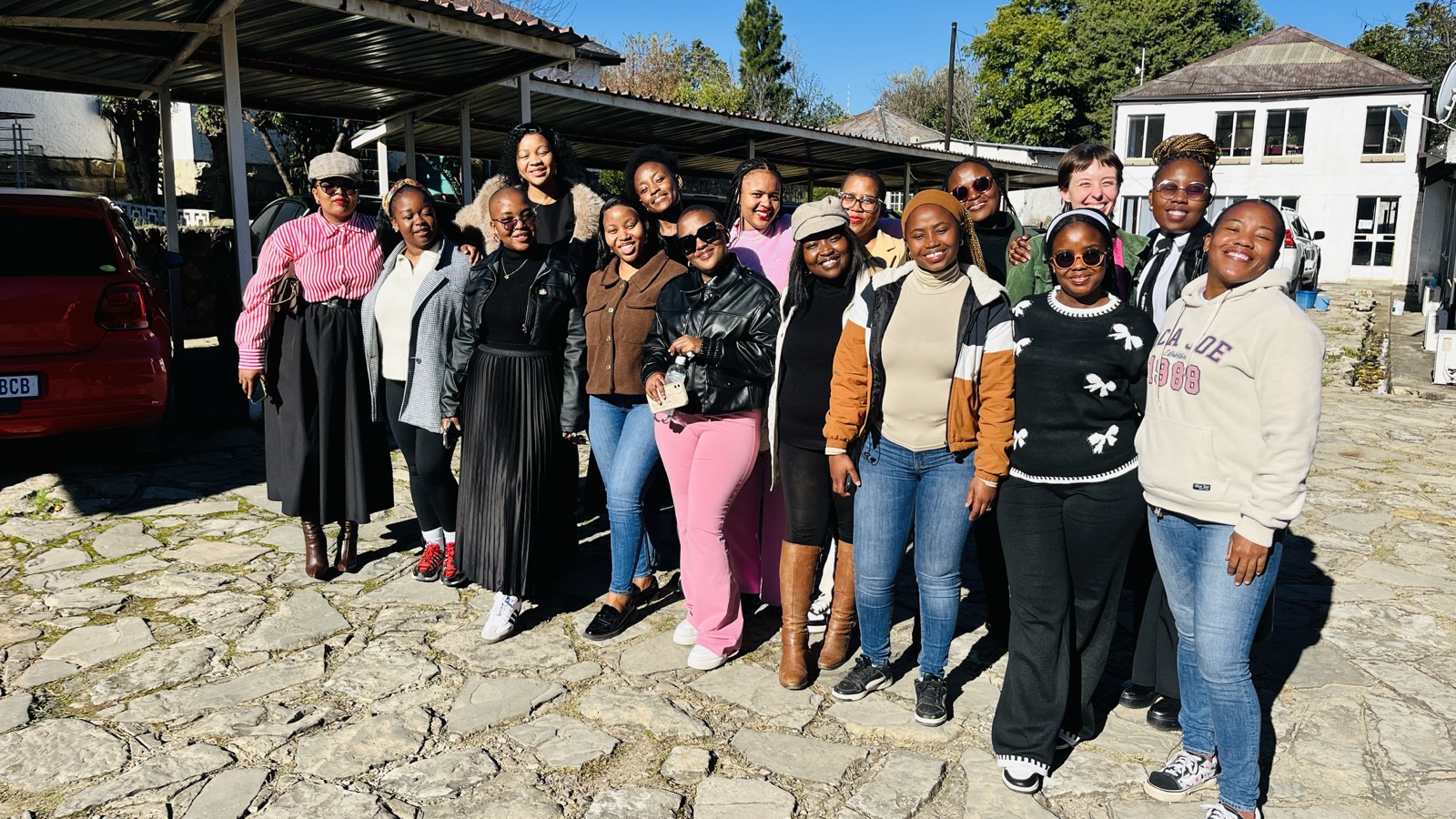
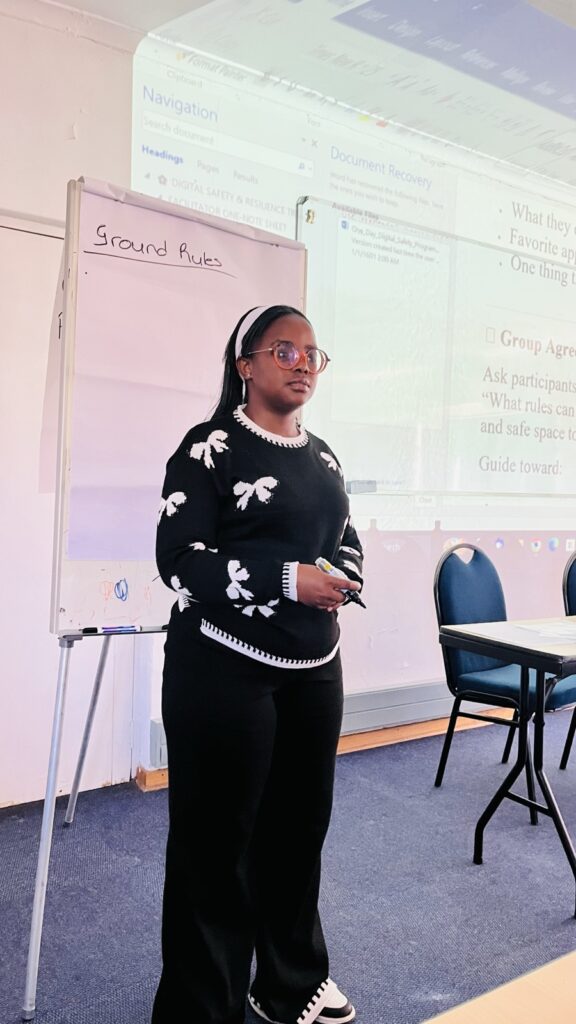
Inspired by the Safe Sisters Fellowship, I organised a one-day Digital Safety & Resilience Workshop in Maseru to extend the knowledge beyond the fellowship and into my own community.
My goal was simple.
I wanted to create a space where digital safety would feel practical, accessible, and relevant to everyday life. More importantly, I wanted participants to leave understanding that protecting themselves online is not about fear—it is about empowerment.
Sixteen Strangers, One Conversation
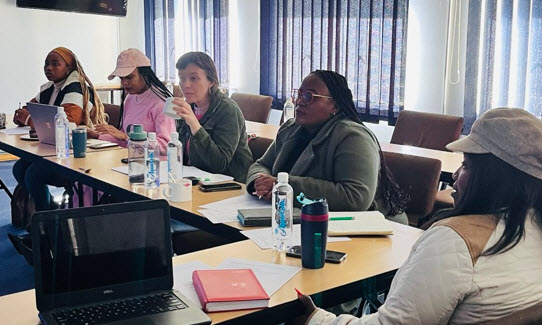
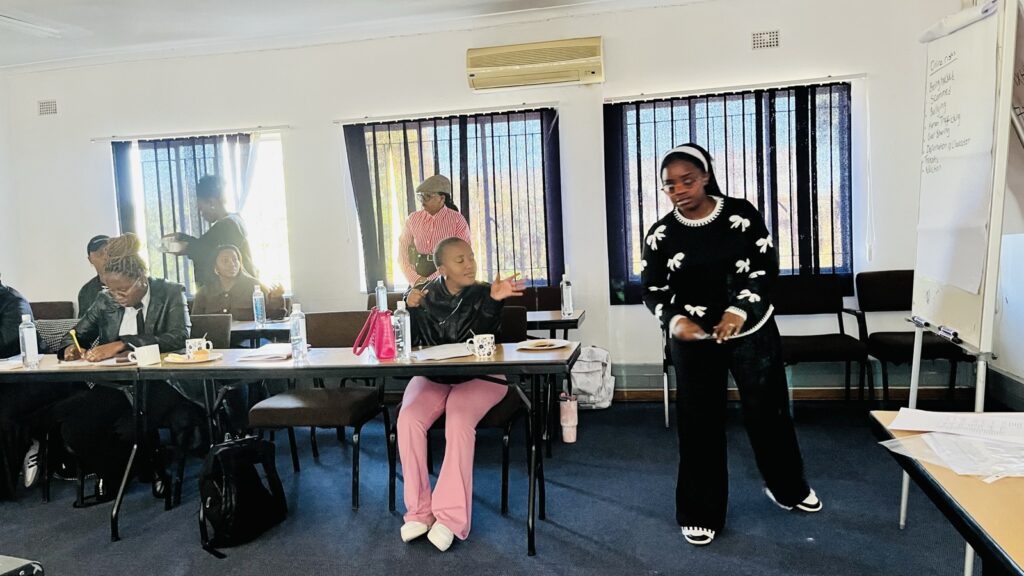
On the morning of the workshop, I arrived at Transformation Resource Centre (TRC) Hall in Maseru, Lesotho, a well-known civil society space that regularly hosts community dialogues, advocacy meetings and capacity-building workshops feeling both excited and nervous. Although the programme was scheduled to begin at 9:00 a.m., participants arrived gradually, and we officially started around 10:00 a.m. What initially felt like a delay soon became an opportunity for people to settle in, introduce themselves, and begin connecting with one another.
We had sixteen participants, each bringing unique experiences and perspectives. Among them were colleagues from Touch Roots Africa, a local non-governmental organisation in Lesotho that promotes the rights, inclusion and wellbeing of vulnerable communities, alongside a software engineering student, filmmaker specialising in gender-based violence storytelling, a chef who was also a content creator, a registered nurse and midwife, community advocates, entrepreneurs, and a transgender woman who is both an HIV activist and a sex worker.
The room quickly transformed from a group of strangers into a community of learners. This sense of openness did not happen by chance. We intentionally began with a simple but meaningful icebreaker that encouraged participants to share not only their names, but also something personal about themselves, the nickname they preferred during the workshop and the social media platform they used most often. These seemingly small conversations helped dissolve the initial awkwardness and created an atmosphere where participants felt seen, respected and comfortable enough to engage honestly throughout the day. The atmosphere immediately became warm, welcoming, and energetic.
People laughed together.
Asked questions.
Shared experiences.
As we moved through the programme, our discussions extended beyond the planned agenda.
When discussing two-factor authentication, participants wanted to understand every available option—from authenticator applications to SMS verification, Google prompts, and phone calls. Rather than simply explaining how each worked, we discussed their advantages and disadvantages so participants could make informed choices based on their own circumstances. During discussions on digital risks, participants suggested that instead of merely identifying threats, we should also explore practical protection strategies for each one.
Together we discussed hacking, phishing, financial scams, identity theft, cyberbullying, skimming, misinformation, online harassment, and privacy breaches.
For every challenge, we explored practical actions that individuals could immediately begin implementing. The conversation became increasingly interactive.
It was no longer about technology.
It was about life.
When Technology Became Personal
One of the most powerful moments of the workshop came when participants began sharing their own experiences.
A filmmaker spoke openly about discovering that someone she trusted had used confidential banking information to steal money from her account. Her story reminded us that digital harm is often rooted in broken trust rather than sophisticated technology.
A content creator shared how she regularly experiences online bullying because she has been married for several years without having children. Although she tries not to let the comments affect her, she admitted that the constant criticism sometimes becomes emotionally overwhelming. Her courage encouraged others to speak honestly about their own experiences.
Perhaps one of the most moving reflections came from a transgender woman who is also an HIV activist and sex worker. She explained that many of her clients are high-profile individuals, making confidentiality an essential part of her personal safety and professional life. Learning about encrypted communication platforms such as Signal gave her confidence that there were safer ways to communicate and protect sensitive conversations. Listening to her speak reminded me that digital security is never one-size-fits-all. Different communities face different risks.
Understanding those realities is essential if we hope to create truly inclusive digital spaces.
Beyond the Programme
One unexpected outcome of the workshop was the way participants naturally began supporting one another. Following discussions on resilience, participants requested that the registered nurse and midwife facilitate an additional conversation on protecting emotional wellbeing in everyday life. The workshop had already moved beyond digital tools—it had become a conversation about caring for ourselves as whole people.
For me, these moments were just as significant as the training itself. The workshop was no longer simply about learning digital safety; it had become a space where people recognised each other’s strengths and began imagining how they could work together beyond that single day.
An unexpected conversation emerged around an upcoming anti-drug awareness commemoration. As participants exchanged ideas, they naturally began offering support to one another. One participant volunteered photography services, another offered to assist with catering, while others pledged their own skills to help make the event successful. Watching people willingly contribute their expertise reminded me that the workshop had become more than a learning space—it had become the beginning of a collaborative network.
A few weeks later, as I prepared for Becoming Her, a personal development masterclass for adolescent girls, several workshop participants reached out and volunteered their skills to support the event. Some offered their professional expertise, while others volunteered their time and services without expecting payment. Their willingness to give back reminded me that the strongest outcome of any fellowship is not only the knowledge gained but also the relationships built.
That experience affirmed something I had not anticipated when I joined Safe Sisters. Digital care has the power to create human connection. The fellowship had brought together people from different professions, backgrounds, and lived experiences, yet they left with a shared commitment to supporting one another’s work and strengthening their communities.
Looking back, I realised we had built more than digital resilience.
We had built a community of care.
The Ripple Effect
As I reflected on the workshop, I finally understood why the title The Ripple Effect of a Safe Sister felt so meaningful.
A ripple begins with one small action. Then it expands outward.
The Safe Sisters Fellowship was my first ripple. Organising the workshop became the second.
The sixteen participants became the third.
From there, the ripples continue in ways I may never fully witness.
Someone will enable two-factor authentication for the first time.
Someone will recognise a phishing scam before becoming a victim.
Someone will protect confidential conversations using encrypted communication. Someone will teach a family member how to secure an online account.
Someone will feel more confident using technology because they understand that they deserve to be safe online.
Those moments may seem small.
Together, they create meaningful change.
Today, I still receive messages from some of the participants sharing how they have begun applying what they learned. Some have reviewed their privacy settings, enabled stronger account protection and become more intentional about their digital footprint. Others continue reaching out to exchange ideas and support community initiatives. These may seem like individual actions, but together they remind me that meaningful change often begins quietly, with one conversation, one decision and one person choosing to do things differently.
Looking Ahead
The Safe Sisters Fellowship has transformed far more than my digital habits. It has reshaped my understanding of leadership.
Today, I see digital safety as an essential part of community development, public health, and human rights advocacy. As I continue my work as an HIV activist, facilitator, and community leader, I am committed to integrating digital safety into the spaces where I already serve.
Because protecting people means protecting every part of their lives—including the digital spaces where they learn, connect, work, advocate, and dream.
Today, I understand that the ripple effect of a Safe Sister is not measured by how much she learns, but by how many people she empowers to feel safer, stronger, and more confident because she chose to share that knowledge. I hope to keep creating those ripples, one conversation, one workshop, and one community at a time.
Advancing Global Innovation and Learning Effectively to Build Resilience in Independent Media (AGILE) is a four-year project co-funded by the European Union and implemented by a consortium led by Informed UK (formerly Internews Europe) in partnership with ARTICLE 19, Canal France International, Fojo Media Institute, and Thomson Media. The project seeks to strengthen the resilience of independent media worldwide against complex and evolving threats.